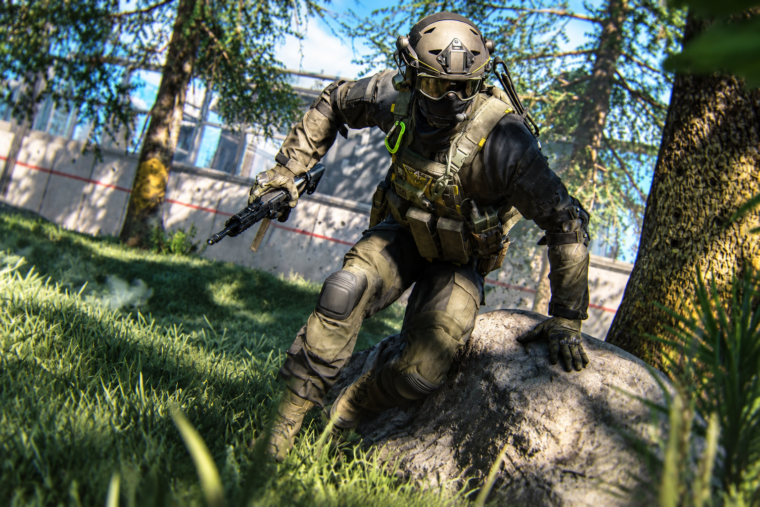
Modern Warfare 4 takes a more grounded approach to multiplayer without giving up the fast pace that defines Call of Duty. Movement transitions are more flexible, gunplay is built around consistent weapon behavior, and Create-a-Class gives players more ways to shape a weapon around the way they actually play.
Movement, stamina, weapon choice, and map positioning all come into play during the same fight. A better route can give you a cleaner angle, while the right weapon setup can make that position much easier to hold. Instead of treating each system separately, it helps to see how they fit into normal multiplayer situations.
Take Control Of Mantles And Movement
Mantling is no longer an animation that simply carries your Operator over an obstacle. MW4 gives you more control during the transition, allowing you to steer, aim, maintain momentum, or cancel the mantle when the situation changes.
That makes low walls, vehicles, and other obstacles more useful during a gunfight. You can start a mantle to check an angle, then cancel it if the position is being watched instead of committing to the entire movement.
Mantle Slide adds another option by letting you transition directly from a mantle into a slide. Sprinting, sliding, climbing, and prone transitions can also connect more naturally, giving you more ways to move through contested areas.
| Movement Mechanic | Practical Use |
|---|---|
| Mantle Steering | Adjust your direction while climbing |
| Mantle Cancel | Abort an unsafe mantle |
| Mantle Slide | Move directly from a mantle into a slide |
| Supine Slide | Lower your profile during a sprint |
| Climbing | Reach alternative routes and positions |
Do not use every movement option just because it is available. A mantle that gives you information or puts you behind useful cover can be far more valuable than a movement chain that only saves a second.
Manage Stamina Around Gunfights
Tactical Sprint now responds to player exertion. As stamina is depleted, movement changes through posture and stride behavior, making stamina part of positioning rather than something to ignore.
That does not mean avoiding Tactical Sprint. It means choosing when to spend it.
Sprint through open areas when you need to rotate, then slow down as you approach a likely engagement. Keeping some stamina available for a quick reposition can be more useful than arriving at a position a few seconds earlier.
A simple routine works well:
- Sprint during longer rotations.
- Slow down near contested areas.
- Keep stamina available for an escape or reposition.
- Use slides when changing direction.
- Pay attention to how your Operator moves as fatigue builds.
Saving some movement for the actual fight gives you more options once an enemy appears.
Make Hip-Fire Part Of Close-Range Combat
MW4 removes traditional hip-fire Bloom, creating a more direct relationship between weapon alignment and shot placement. Recoil, sway, movement, and weapon handling still affect accuracy, but players no longer have to deal with the same random shot deviation.
This gives hip-fire a more useful place in close-range fights.
When an opponent suddenly appears a few steps away, firing from the hip can be faster than immediately entering ADS, particularly with weapons designed for close combat. At longer distances, ADS remains the more controlled option.
The range of the fight should determine how you aim. Automatically going into ADS every time can slow down your reaction in situations where a quick hip-fire burst is enough.
Let Your Weapon Influence Your Position
Your loadout should affect where you want to fight.
SMGs are naturally comfortable in tighter routes and mobile engagements. Assault rifles offer more flexibility across medium ranges, while sniper and marksman weapons benefit from stable positions and clear sightlines.
This matters when moving between different areas of a map. A close-range weapon gives you a reason to favor interiors and shorter routes, while a long-range setup gives you more value from open lanes.
Think about the weapon in your hands before entering a new area. If the space does not suit your setup, changing your route can be better than forcing the fight.
Use Gunny To Build A Starting Loadout
MW4’s Gunsmith offers extensive customization, but you do not need to test every attachment before creating a useful weapon.
Gunny can use your unlocked attachments to assemble builds around different approaches, including close-range, balanced, and long-range setups. These builds give you a practical starting point that can be changed after a few matches.
A simple way to refine a Gunny build is:
- Pick the setup closest to your preferred range.
- Play several matches with it.
- Identify the biggest weakness.
- Change one or two attachments.
- Test the weapon again.
This keeps Gunsmith experimentation focused on actual gameplay instead of spending too much time comparing every statistic.
Give Fully Leveled Weapons A New Role
Apex Attachments give fully progressed weapons another layer of customization.
These specialized modifications are unlocked through weapon progression and are equipped separately from standard attachments, so they do not take up a normal attachment slot. Their effects can change weapon handling, firing behavior, tactical utility, stealth capability, or even the role of the weapon.
The M4, for example, can receive the Hurricane Apex conversion, while the Kastov 762 ARC adds a specialized system designed to disrupt enemy Killstreaks and equipment.
That gives players another reason to keep working on weapons they already know. A fully leveled gun is not limited to the role it had during the early stages of progression.
Read The Map Before Making A Push
Movement becomes much more useful when you already know where you want to go.
Pay attention to repeated enemy routes, strong cover, long sightlines, and areas where different engagement ranges meet. Before entering a new space, consider:
- Which angle is most likely to be watched
- Where can you take cover after entering
- Is there another route into the area
- Does your current weapon suit this space
- Where can the enemy retreat
These questions take only a moment but can prevent unnecessary decisions once the gunfight starts.
Map awareness also gives your movement a purpose. Knowing where you want to end up makes mantle cancels, slides, and climbing routes easier to use without turning every engagement into a movement showcase.
Adapt To The Changing Layout Of Kill Block
Kill Block is built around changing combat spaces instead of one fixed layout. The mode uses three interconnected Slabs, with different combinations changing routes, sightlines, and available cover. It supports both 3v3 and 10v10 Gunfight.
The layout changes between rounds, so memorizing one route is not enough. When a new configuration appears, identify the main sightlines and connecting paths before committing to a push.
Randomized shared Loadouts add another layer. Your preferred weapon may not always be available, so positioning needs to change with the equipment you receive. A long-range weapon can make an open lane valuable, while a close-range setup gives tighter sections more importance.
Players who want extra practice with movement, aiming, and unfamiliar weapons can also use MW4 Bot Lobbies while getting comfortable with these systems.
Build A Playstyle That Can Adapt
MW4 rewards players who can adjust their movement, gunplay, and loadout choices during a match instead of relying on the same trick every time. Manage stamina during rotations, use mantle control when approaching cover, and choose fights that fit the weapon in your hands.
Gunny gives you a practical starting point, while Apex Attachments give fully progressed weapons another way to play. Kill Block adds a different challenge by changing the layout and loadout conditions, forcing you to make decisions instead of following the same route every round.
For players looking for additional practice with movement, weapon handling, and map awareness, cheap MW4 Bot Lobbies can also provide more room to work on specific mechanics.
Practice the movement, test different weapon setups, and pay attention to how each map changes the way you approach a fight. Over time, these choices become part of normal decision-making instead of something you have to think about during every engagement.
